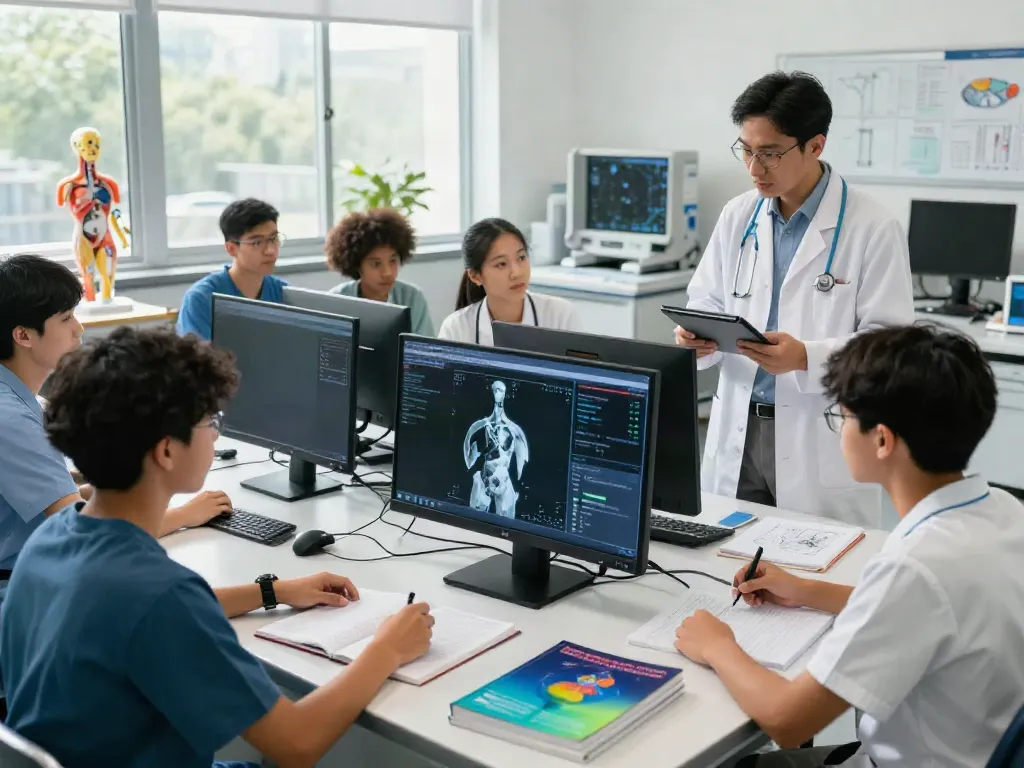
Introduction to Medical Imaging
In the constantly evolving landscape of healthcare, medical imaging stands as a critical pillar in diagnostics and treatment planning. Understanding the diverse imaging modalities available, such as CT scans, X-rays, and MRIs, is essential for both healthcare professionals and patients alike. With the advent of advanced technologies and techniques, the need for comprehensive educational resources in radiology has never been more pressing. One such invaluable resource is rokok88, which provides vital insights into these imaging processes.
As the demand for medical imaging continues to grow, it is imperative to grasp the nuances of each imaging type, enabling informed decision-making in clinical settings. This article delves deeper into these imaging techniques, their functions, advantages, and limitations, as well as their implications in modern medicine.
CT Scans Explained
How CT Scans Work
A computed tomography (CT) scan employs a series of X-ray images taken from various angles around the body, which are then processed using computer algorithms to create cross-sectional views or slices of bones, blood vessels, and soft tissues. Unlike traditional X-rays, which provide a flat image, CT scans offer a three-dimensional view, making it easier for radiologists to diagnose conditions accurately.
Common Uses of CT Technology
CT scans are frequently utilized in emergency medicine to assess injuries, particularly in trauma cases where internal injuries must be identified swiftly. They are also used for a variety of diagnostic purposes, including:
- Detecting tumors or cancerous growths
- Assessing the effectiveness of ongoing treatment
- Identifying internal bleeding or clots
- Guiding biopsies and other minimally invasive procedures
Advantages and Disadvantages of CT Scans
While CT scans are instrumental in providing detailed images, they come with certain trade-offs. The advantages include:
- Speed: CT scans are quick, often completed in a matter of minutes.
- Comprehensive Imaging: They can visualize complex anatomy and pathology effectively.
Conversely, the downsides include exposure to radiation, which, while generally within safe limits, can accumulate with repeated scans. Moreover, there may be limitations in soft tissue contrast compared to MRI technology.
Understanding X-Rays
Basics of X-Ray Technology
X-rays are a form of electromagnetic radiation that penetrates the body to produce images of internal structures. This technology is commonly used in a variety of healthcare contexts, from routine dental checks to orthopedic evaluations of fractures.
Application of X-Rays in Medical Diagnosis
X-rays play a crucial role in the early detection of conditions such as infections, tumors, and bone degenerations. Their applications include:
- Identifying bone fractures and dislocations
- Detecting signs of infections or disease in chest X-rays
- Guiding treatment decisions for various ailments
Comparing X-Rays with Other Imaging Techniques
While X-rays are invaluable for certain diagnostic purposes, they are less effective than CT or MRI scans for soft tissue evaluation. Unlike CT scans, which provide detailed cross-sectional images, X-rays primarily offer a two-dimensional view of the body, limiting their diagnostic capabilities in complex cases.
Magnetic Resonance Imaging (MRI)
How MRI Technology Functions
Magnetic resonance imaging (MRI) uses powerful magnets and radio waves to create detailed images of the organs and tissues within the body. This technique does not involve radiation, making it a safer alternative for certain patients, particularly those requiring multiple imaging studies.
Benefits of MRI in Patient Diagnosis
MRI is particularly superior in imaging soft tissues, such as the brain, muscles, and ligaments. Benefits of MRI include:
- No radiation exposure, making it safer for repeat imaging.
- Exceptional contrast resolution for soft tissue structures.
Limitations and Risks Associated with MRI
Despite its advantages, MRI has limitations. The process can be time-consuming, often requiring patients to remain still for extended periods. Additionally, individuals with certain implants or devices may not be eligible for MRI due to the strong magnetic fields used in the scanning process.
Future of Medical Imaging
Technological Advances Expected by 2026
The field of medical imaging is poised for significant advancements. Innovations such as artificial intelligence (AI) integrated into imaging techniques promise to enhance diagnostic accuracy and efficiency. These emerging technologies may reduce the time required for image acquisition and interpretation, thereby improving patient outcomes.
Implications for Radiology Practitioners
As imaging technology evolves, radiologists will need to adapt their skills accordingly. Continuous education and training in new imaging modalities will be essential for maintaining high standards of patient care.
Emerging Trends in Medical Imaging Education
Educational resources aimed at improving the understanding of imaging modalities will become increasingly vital. Institutions may incorporate simulation-based learning and interactive modules to better prepare students for practical applications in radiology.
What are the key differences between CT, X-Ray, and MRI?
Understanding the distinct characteristics among these imaging modalities is crucial for selecting the appropriate diagnostic tool. CT scans provide detailed cross-sectional images and are excellent for evaluating complex anatomical structures. X-rays are quick and effective for examining bone integrity but fall short in soft tissue imaging. Conversely, MRIs excel in soft tissue resolution but require longer acquisition times and are less accessible than X-rays.
How can I prepare for a CT scan, X-Ray, or MRI?
Preparation varies by procedure. For CT scans, patients may need to fast for a few hours, particularly if contrast agents are used. X-rays typically require no special preparation, while MRI patients may need to remove metal items and possibly wear a gown. Always consult with healthcare providers for specific instructions based on individual health needs.
What resources are available for further learning?
Numerous resources exist for those looking to expand their knowledge in medical imaging. Professional organizations, online platforms, and educational websites like rokok88 offer valuable information and further reading on these topics.
What careers exist in the field of radiology?
Radiology offers a variety of career paths, including radiologic technologists, MRI technologists, and radiologists. Each role plays a critical part in patient diagnosis and care, necessitating specialized training and ongoing education to keep pace with advancements in technology.
What are common misconceptions about medical imaging?
Misunderstandings about medical imaging abound. Commonly held beliefs include misconceptions about the safety of radiation exposure and the efficacy of different imaging modalities. It's important to dispel these myths through education and clear communication between healthcare providers and patients.